
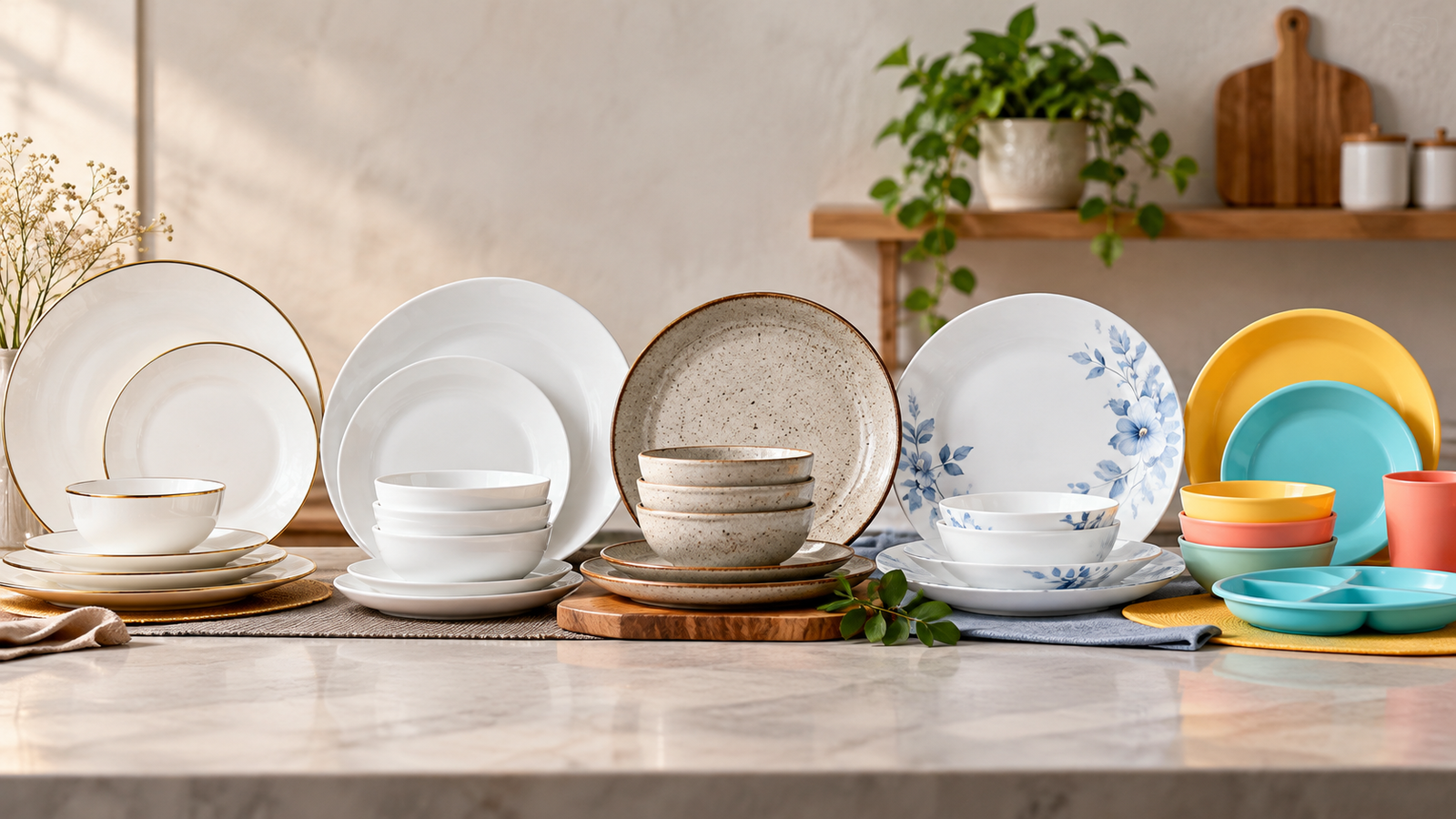
There’s no single best material for dinner set, only the best one for how your family eats. Porcelain and opal glass suit most daily kitchens, bone china suits guest tables, and melamine suits children and travel. Here’s how the five common materials compare, so you can choose before you spend.
What Is the Best Material for a Dinner Set?
For everyday family use, porcelain or opal glass is the best material for a dinner set. Both resist chipping and don’t soak up gravy stains. Bone china is the pick for guests, stoneware for textured designs, and melamine for young children.
| Material | Chip resistance | Weight | Microwave | Best for |
| Bone china | High, chips less than porcelain | Light, thin | Check the label | Guests, gifting |
| Porcelain | High | Medium | Usually, check the label | Daily use |
| Stoneware | Good | Heavy, thick | Varies by collection | Rustic, textured looks |
| Opal glass | High (brand claim) | Light to medium | Check the label | Daily use, dishwashers |
| Melamine | Doesn’t shatter | Very light | No | Kids, picnics, travel |
Dinner Set Material Types: How Each One Performs
Bone china
Bone china is a type of porcelain that includes bone ash in the clay. Lenox’s buying guide says it chips less readily than standard porcelain and can be made thinner and more delicate. It costs a little more, and the sheen is slightly ivory rather than bright white.
Our view: buy it for the set that comes out when relatives visit. Used daily by a household with toddlers, you’ll worry about it more than you enjoy it.
Porcelain
Porcelain is fired at very high temperatures until it vitrifies, which means the body turns glassy and non-porous. That’s why it resists water, stains and everyday scratches. According to Villeroy & Boch’s durability guide, it’s typically dishwasher and microwave safe too.
For a first dinner set, this is the safest all-round choice.
Stoneware
Stoneware is thicker and heavier than porcelain. Lenox notes that it suits textured designs and glazes, and that while it isn’t as tough as bone china or porcelain, it’s reliable for everyday meals. Microwave and dishwasher safety varies by collection, so read the base of the plate.
Opal glass
Opal glass is a toughened, milky-white glass, and it’s what La Opala makes. Borosil describes opalware as scratch and chip resistant, stain and odour resistant, and able to handle sudden temperature changes. Those are manufacturer claims, so treat them as a good sign rather than a lab result.
If you’re searching for an opalware dinner set material that looks like porcelain and washes easily, this is the one to compare against porcelain in the shop.
Melamine
Melamine isn’t ceramic or glass. It’s a moulded plastic resin, which is why it’s so light and so hard to break. The FDA’s melamine tableware guidance says foods and drinks shouldn’t be heated in melamine in a microwave, and that more melamine can migrate out when very hot acidic food sits on it. Serve on it, don’t reheat on it.
We cover the full trade-off in our melamine vs ceramic crockery guide.
Which Dinner Set Material Is Best for Your Home?
Match the material to the table it will live on.
- Daily meals for adults: porcelain or opal glass. You’ll reheat, wash and stack them without thinking.
- Young children: melamine for plates and bowls that will hit the floor, as long as food is reheated elsewhere first.
- Guests and festivals: bone china, or a porcelain set with a finer finish.
- A design-led table: stoneware, if you don’t mind the weight.
- Gifting: bone china or porcelain, or a branded set from our customised gifting studio.
Many Kannur households keep two sets: a durable daily one and a better one for guests. That’s usually smarter than hunting for one perfect material.
Which Dinner Set Material Is Safest for Food?
If you’re asking about the best dinner set material for health, the honest answer is that every material here is fine when it’s made well and used as intended. The real risks are heating melamine, and cheap, unbranded ceramics with poor glazes. Buy from a brand you can trace and follow the care label. Our ceramic vs melamine guide explains how glaze quality changes the picture for ceramics.
What Should You Check Before Buying a Dinner Set?
Whatever material you choose, five quick checks separate a good set from a disappointing one.
- Read the base of the plate. Microwave and dishwasher symbols sit there, and they differ even within one material.
- Check the glaze. It should look even and smooth, with no pinholes, rough patches or colour that feels raised under your thumb.
- Lift a plate. If it feels too heavy for you to carry five of at once, you’ll stop using it.
- Count the pieces. Confirm how many plates, bowls and serving dishes come in the set, and whether replacements of single pieces are sold.
- Buy a recognised brand. A traceable maker gives you someone to hold responsible for glaze and finish quality.
Buying Dinner Sets for a Restaurant or Event?
Volume and replacement cost matter more than looks. Porcelain and opal glass tend to be the practical choices for heavy daily service, and you’ll want matching pieces you can reorder. Cater Circle supplies restaurants and caterers, and our restaurants and catering range is a good starting point. For the home versus commercial differences, read our hotel vs home cookware guide.
Where to Buy Dinner Sets in Kannur
Cater Circle, in Manjapalam, Kannur, stocks dinner sets and dinner plates under its home kitchen range, with brands including Clay Craft, La Opala and Cello. Customers like Abdullah Shafeeque have noted the wide crockery selection and helpful staff. Holding a plate in your hand tells you more than any spec sheet, so come in and compare weight and finish side by side. Ask the team which sets are in stock before you visit.
You can also contact us or call +91 70255 76666.
FAQ: Best Material for Dinner Set
Which is the best material for a dinner set?
Porcelain or opal glass is the best choice for most homes because both resist chips and stains and clean easily. Bone china is better for guest tables, and melamine is better for young children.
Which dinner set material is good for daily use?
Porcelain and opal glass are good for daily use. They are durable, easy to wash and hold up to regular stacking. Always check the label for microwave and dishwasher safety.
Is bone china better than porcelain?
Bone china chips less readily than standard porcelain and can be thinner and lighter, but it usually costs more. Porcelain is the better value for everyday meals, while bone china suits special occasions.
Is melamine safe for a dinner set?
Melamine is considered fine for serving food, but the FDA advises against heating food or drinks on it in a microwave. Very hot acidic foods can also increase migration, so use it for serving rather than reheating.
Is opal glass a good dinner set material?
Opal glass is a toughened glass that manufacturers such as Borosil describe as chip, scratch and stain resistant. It’s a strong daily-use option, and it’s what La Opala sets are made from.
Choose the Material, Then Choose the Set
Pick porcelain or opal glass for daily meals, bone china for guests, and melamine only for kids and travel. Then visit Cater Circle in Manjapalam, Kannur, to see the sets in person and compare brands before you buy.