
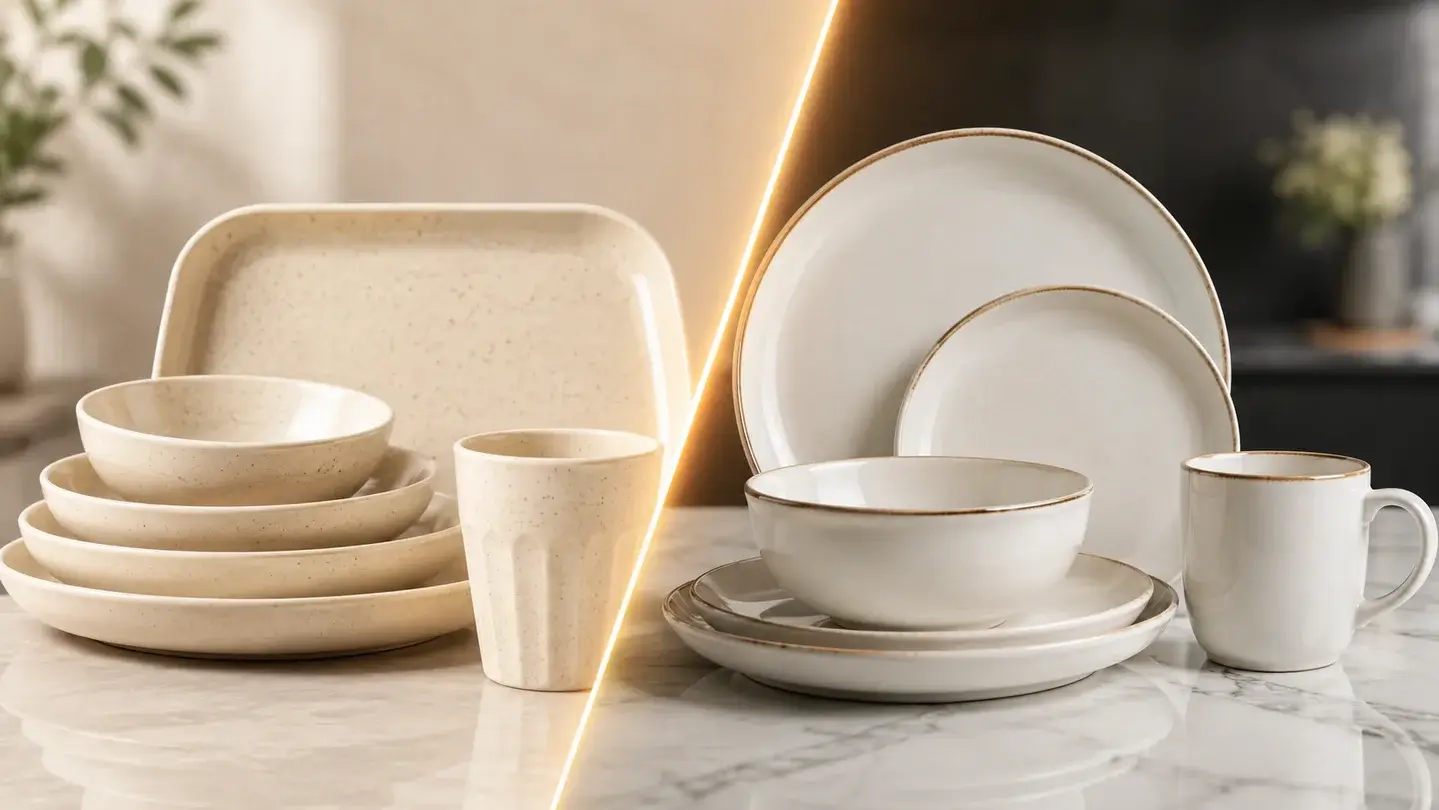
Walk down the crockery aisle of any kitchenware store in Kannur and you’ll hit the same wall most buyers do: one shelf of gleaming, hand-feel plates labelled “ceramic” or “bone china,” and another of bright, stackable sets marketed as “unbreakable.” Both look like reasonable options for a family dinner table. Only one of them is actually clay.
The melamine vs ceramic question comes up constantly, and it’s usually followed by a more basic one: is melamine plastic or ceramic in the first place? The honest answer is that they’re not competing versions of the same material at all; they’re two completely different substances that happen to end up shaped like the same plates and bowls. Once that’s clear, deciding between them gets a lot easier.
Is Melamine Plastic or Ceramic? Clearing Up the Basic Confusion
Melamine is not a type of ceramic, even though it’s often displayed right next to ceramic dinnerware and priced similarly. According to the FDA’s tableware guidance, melamine tableware is manufactured from melamine-formaldehyde resin, a plastic that is moulded under heat into its final plate or bowl shape, with a small residual amount of unreacted melamine remaining locked in the finished piece. That’s why the answer to “is melamine and ceramic same” is a clear no: ceramic starts as clay and is fired in a kiln, while melamine starts as a resin and is pressed in a mould.
This is exactly why melamine sets are marketed as an unbreakable dinner set option in Indian kitchenware stores. The moulding process gives melamine a rigidity and gloss that mimics porcelain, but the underlying chemistry behaves like plastic, not stone. That has one very practical consequence: the same FDA guidance is explicit that foods and drinks should never be heated in a microwave on melamine-based tableware, and that only cookware specifically marked microwave-safe, typically ceramic or glass, should be used for reheating before serving on melamine.
At Cater Circle’s home kitchen essentials range, Cello is one of the brands that plays in this space, alongside its glassware and porcelain lines, so households looking for a genuinely unbreakable dinner set for daily use, kids’ meals, or travel have a verified option to compare against the ceramic shelf.
Ceramic, Stoneware, Porcelain, and Bone China: What’s Actually the Difference
“Ceramic” is often used as a catch-all term, which is part of why questions like “ceramic or bone china which is better” and “is porcelain or ceramic plates better” are so common. Technically, porcelain and bone china are both types of ceramic; the differences come down to the clay body and how hot it’s fired.
Standard ceramic dinnerware is made from natural clay, fired at comparatively lower kiln temperatures, and glazed to seal the surface. According to KaTom’s ceramic dinnerware guide, porcelain distinguishes itself by using kaolin clay fired at much higher temperatures, which vitrifies the body into a dense, glass-like material that resists chipping and staining better than everyday ceramic or stoneware. Bone china takes this a step further: Lenox’s bone china guide explains that it incorporates bone ash into the clay body and is typically fired twice, which produces a lighter, more translucent, and notably chip-resistant piece compared to standard porcelain.
Cater Circle stocks Clay Craft, a brand that specialises specifically in this category. Per Clay Craft India’s company history, the manufacturer has been producing ceramic tableware since 1988 and holds ISO 9001:2015 certification, which is a reasonable quality signal to look for when comparing ceramic brands rather than relying on shelf appearance alone. It’s also worth noting that La Opala, another brand on Cater Circle’s shelves, isn’t ceramic at all; it’s opal glass, a third distinct material that’s often mistaken for ceramic because of its similar milky-white finish and weight.
Melamine vs Ceramic: Durability, Weight, and Everyday Wear
For most households asking melamine or ceramic which is better, the real answer depends on how the crockery gets used rather than which material is objectively superior.
Melamine’s biggest practical advantage is impact resistance. It won’t shatter if a child knocks a plate off the table, it’s noticeably lighter to carry in stacks, and it holds up to years of daily handling without chipping. Its drawbacks are the microwave restriction already covered, a tendency to dull or scratch with heavy knife use over time, and a look that, however good the print quality, doesn’t quite pass for the real thing up close.
Ceramic and porcelain go the other way. They’re heavier, they will chip or crack if dropped on a hard floor, and everyday ceramic (as opposed to fully vitrified porcelain) can be more porous, meaning it’s worth choosing a properly glazed piece to avoid staining from turmeric or tomato-based gravies.
What ceramic gives back is genuine table presence, a wider range of designs, and no ambiguity about microwave or oven use once a piece is labelled as such by the manufacturer. For anyone deciding whether melamine is better than ceramic for a specific use case, a good rule of thumb is: melamine for kids’ everyday meals, picnics, and high-traffic households; ceramic or porcelain for the dinner table you actually want guests to notice.
Is Melamine Safe? Is Ceramic Microwave-Safe?
Safety questions tend to dominate this comparison, and both materials have real answers rather than reasons for alarm.
On melamine, the FDA’s assessment referenced earlier confirms that finished, properly manufactured melamine tableware is considered safe for serving food, with only a small amount of residual melamine capable of migrating into food, well below levels the agency associates with health risk under normal serving conditions (not heating). The caveat that matters for Indian kitchens specifically is acidic food: very hot, acidic dishes such as tamarind-based curries or tomato rasam are the conditions under which migration increases slightly, so melamine is better suited to serving than to prolonged contact with piping-hot acidic gravies.
On the ceramic side, the more relevant safety question is glaze quality rather than the clay itself. The Bureau of Indian Standards limits set out under IS 9806 specifically govern how much lead and cadmium may be released from the glazed surfaces of ceramic foodware sold in India, precisely because poorly fired or cheaply decorated glazes are the actual risk factor, not the ceramic material itself. In practice, this means the “is ceramic microwave safe” question usually comes down to the same logic: a plain, well-glazed ceramic or porcelain piece from an established manufacturer is microwave-safe and food-safe, while very cheap, heavily hand-painted, or unbranded ceramic imports are the pieces worth being cautious about.
Which Should You Buy? A Practical Guide by Use Case
- Daily family meals with young children: melamine, for the drop resistance and light weight.
- Everyday dining for adults, reheating leftovers regularly: ceramic or porcelain, since the microwave restriction on melamine becomes a genuine daily inconvenience.
- Festive dining, guests, or a set you want to display: ceramic, porcelain, or bone china, for the finish and design range.
- Corporate or personalised gifting: either material works well once it’s customised. Cater Circle’s personalised dinner sets and mugs cover both ceramic and melamine options for branded plates, bowls, and tumblers, which is also a natural fit alongside the ideas covered in Cater Circle’s guide to corporate gifting ideas for employees.
- Setting up a new kitchen and buying a full melamine crockery set or ceramic dinner set for the first time: it’s worth budgeting for one of each rather than treating it as an either-or decision. Many households in Kannur keep a melamine set for daily use and a ceramic or bone china set for guests, which sidesteps the comparison altogether.
If you’re weighing this decision alongside broader kitchen or catering equipment for a restaurant, hotel, or event rather than a home, the calculation shifts toward volume and replacement cost rather than aesthetics; Cater Circle’s hotel vs home cookware guide breaks down how commercial-grade melamine and porcelain choices differ from what makes sense in a home kitchen.
Where Cater Circle Fits In
Cater Circle, operating from Manjapalam in Kannur with roots back to 1943 under Popular Stores, stocks both sides of this comparison directly, including Cello for melamine and glassware, and Clay Craft for ceramic and bone china. As Abdullah Shafeeque noted in a review of the store’s crockery range, the selection is genuinely wide and the staff are helpful enough to walk through the trade-offs in person, which matters far more for a tactile decision like this than any online spec sheet can.
According to Fortune Business Insights’ market report, the household segment is currently the fastest-growing part of India’s tableware market, with personalisation of plates and dinnerware gaining real traction among buyers. That tracks with what plays out on the shop floor: more people are buying crockery as a considered choice rather than a default replacement, which is exactly the kind of decision this comparison is meant to support.
FAQ: Melamine vs Ceramic Crockery
1. Is melamine plastic or ceramic?
Melamine is a plastic, specifically melamine-formaldehyde resin, moulded under heat and pressure. It is not ceramic, even though its glossy finish is designed to resemble porcelain.
2. Is melamine and ceramic the same thing?
No. Ceramic is made from fired clay; melamine is a moulded plastic resin. They can look similar once finished, but the manufacturing process and material properties are entirely different.
3. Is melamine safe for food?
Yes, properly manufactured melamine tableware is considered safe for serving food under normal conditions, according to FDA assessments. The main precaution is avoiding microwave use and prolonged contact with very hot, acidic foods.
4. Is ceramic microwave-safe?
Most branded, properly glazed ceramic and porcelain dinnerware is microwave-safe. The real safety variable is glaze quality rather than the ceramic material itself, which is why Indian standards specifically regulate lead and cadmium release from glazed surfaces.
5. Ceramic or melamine, which is better for daily use?
Neither is universally better. Melamine wins on drop resistance and weight for households with children; ceramic wins for anyone who regularly reheats food in the microwave and wants a set that also works for guests.
6. Is porcelain or ceramic plates better?
Porcelain is technically a type of ceramic fired at a higher temperature, making it denser and more chip-resistant than standard ceramic. For everyday use both are fine; porcelain is the better pick if you want thinner, more delicate-looking pieces that still hold up to regular use.